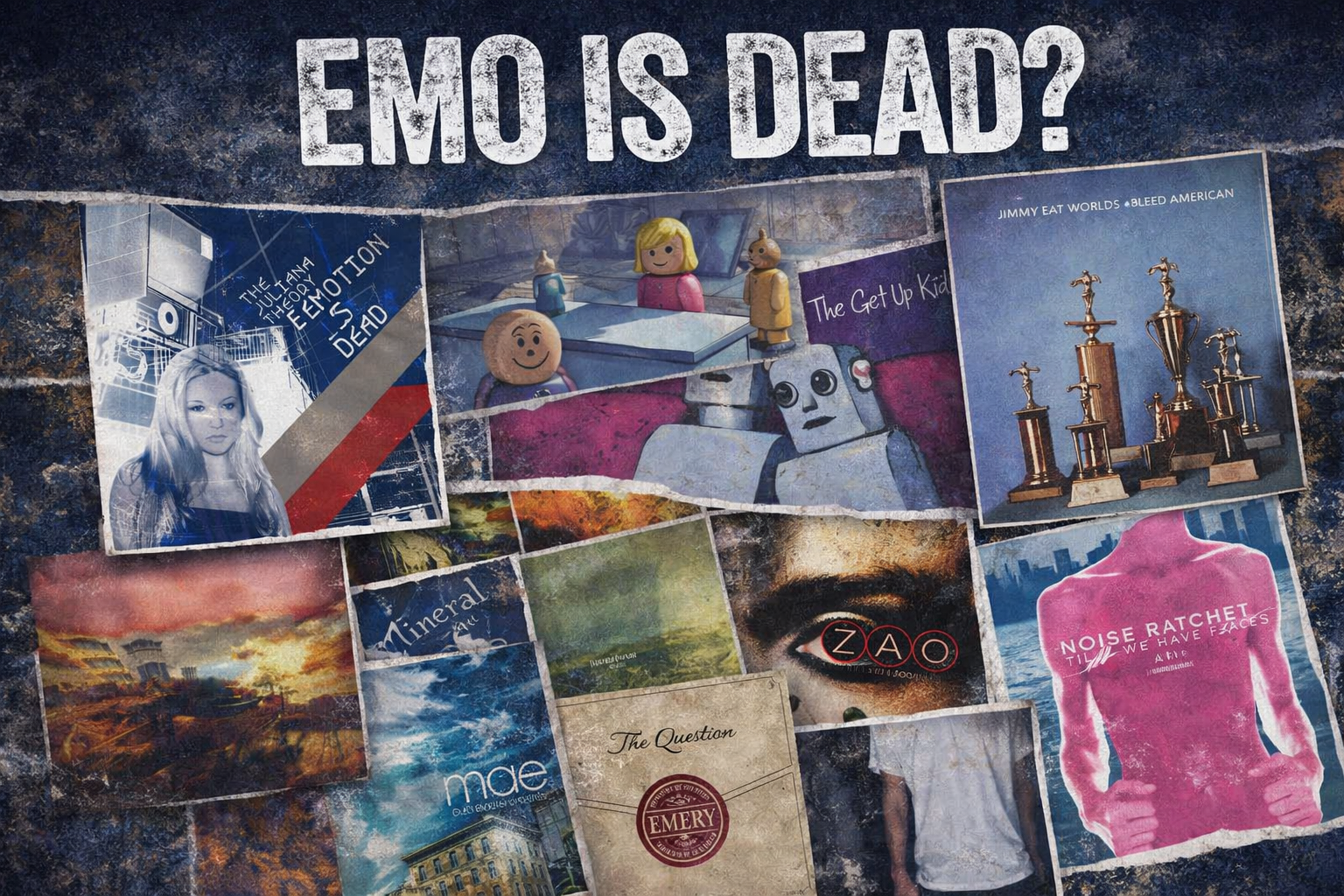
Emo Is Dead?
People say emo is dead. I don’t buy it.
Emotion Is Dead by The Juliana Theory still holds up just as strong today as it did 25 years ago. The melodies, the emotion, and especially the breakdowns in “To the Tune of 5,000 Screaming Children” and “Is Patience Still Waiting?” are some of the best the genre has ever produced. That album is as close to perfection as emo gets.
But even that statement gets debated. Some hear emo. Others hear a mix of 90s alternative, pop, and rock influences all colliding into something bigger than a single label. And honestly, that’s part of the point.
Emo has never been easy to define.
For me, bands like Stavesacre, Underoath, or As Cities Burn were not the first names that came to mind when I thought of emo. But the more you listen, the more you realize this style touches everything. It stretches from indie to hardcore to alternative and even into spoken word with bands like Listener, who carved out their own lane entirely.
Then you have albums like The Question from Emery. I recently saw them perform it front to back for the anniversary, and it was a reminder of what this music really does. The room was packed with every lyric being sung at the top of everyone’s lungs. That kind of energy doesn’t come from nostalgia alone. It comes from connection.
A lot of this scene grew out of other movements. Hardcore kids found emo. Punk fans found emo. Indie fans found emo. As one fan said, “Emo is for the hardcore kid who grows up.” That line hits because there’s truth in it.
You can trace the roots through bands like Jimmy Eat World, Sunny Day Real Estate, and The Get Up Kids. From there, it branches into so many directions. Further Seems Forever, Mae, and Copeland leaned into melody and atmosphere. Beloved, Embodyment, and Dead Poetic pushed heavier sounds. Noise Ratchet, Twothirtyeight, and Cool Hand Luke carried that emotional core into their own unique spaces.
And then there are the bands that lived just outside the lines but still shaped the culture: Anberlin, The Almost, Thrice, Brand New, Sullivan, and more. Some people include them. Some don’t. That debate alone proves the point.
Emo isn’t a box. It’s a spectrum.
What really stands out when talking to people about this era is how personal it is. For some, it was walking into a record store and discovering Emotion Is Dead, The Moon Is Down, and Bleed American all at once. For others, it was late nights, youth groups, burned CDs, and weekend shows that shaped their entire music taste.
That late 90s to mid-2000s run was different. It felt like every week there was another album worth sitting with from start to finish. And that matters, because emo was never about singles. It was about the full experience.
So is emo dead?
No.
It just evolved. It spread. It became something bigger than a genre label.
And if you’ve ever stood in a room full of people screaming every word back at the band, you already know the truth.
Emo isn’t dead.
It never was.