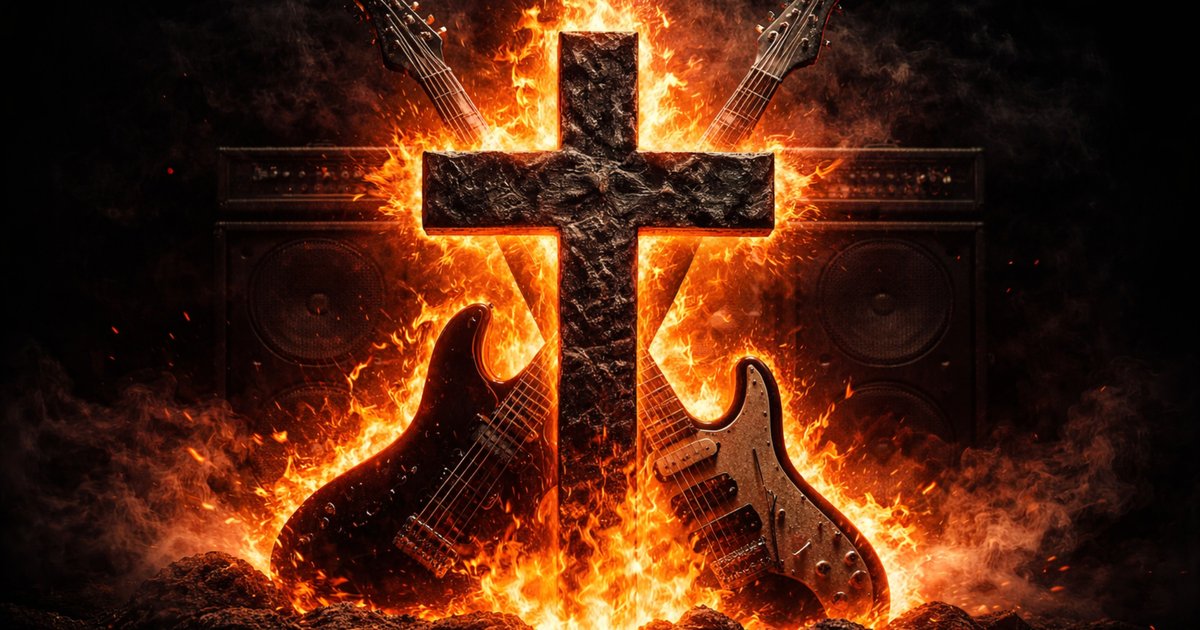
Metal has always been a place of honesty. From the beginning, Christian musicians have stood within heavy music and addressed the full range of biblical truth. Scripture speaks openly about suffering, hope, warfare, judgment, deliverance, salvation, resurrection, and the holiness of God. These themes are not foreign to heavy music. They are part of its emotional vocabulary. Across decades and genres, Christian metal artists have written lyrics that treat theology with seriousness and conviction. Some quote Scripture directly. Others paraphrase biblical passages or explore doctrine with depth and clarity. Together, these bands demonstrate that the Gospel does not merely exist within heavy music. It is powerfully expressed through it.
It is important to clarify what this article is and what it is not. Many well-known bands throughout rock and metal history have drawn inspiration from biblical stories, imagery, or historical events rooted in Scripture. Artists such as Metallica, Megadeth, Helloween, Pink Floyd, Iron Maiden, Black Sabbath, Sabaton, and Sonata Arctica have incorporated biblical references, spiritual themes, or religious symbolism into their work. In those cases, Scripture often serves as inspiration, allegory, or narrative framework.
The bands highlighted in this article operate from a different foundation. These artists intentionally engage with Christian theology in their songwriting. They study Scripture, wrestle with doctrine, and seek the guidance of the Holy Spirit as they write lyrics meant to speak directly to people. Their purpose is not symbolic storytelling or philosophical reflection alone. Their goal is proclamation. The theology in their music is not incidental. It is central. Each band included here uses biblical truth with the express intent of pointing listeners to Jesus Christ and communicating the Gospel through heavy music. This is not an exhaustive list, but a curated cross-section highlighting different genres where theology is intentionally proclaimed.
Theocracy (Power Metal)
“I AM” from As the World Bleeds reflects God’s self-identification in Exodus 3:14 and Revelation 22:13. “Easter” from Ghost Ship follows the resurrection narrative of Matthew 28. “Laying the Demon to Rest” from Mirror of Souls reflects the inner struggle described in Romans 7.
Wytch Hazel (Heavy Metal / Hard Rock)
“He Is the Fight” from III: Pentecost echoes Psalm 18:2. “Dry Bones” from IV: Sacrament directly reworks Ezekiel 37. “Spirit and Fire” from II: Sojourn reflects Acts 2 imagery.
Tourniquet (Technical Thrash / Progressive Metal)
“Ark of Suffering” from Stop the Bleeding is rooted in Proverbs 12:10. “Bearing Grief” from Pathogenic Ocular Dissonance reflects Isaiah 53. “Vanishing Lessons” from Vanishing Lessons explores Romans 12:2 and spiritual transformation.
Disciple (Modern Metal / Hard Rock)
“God Is With Us” from Horseshoes and Handgrenades reflects Romans 8:31. “Invisible” from Scars Remain parallels Psalm 139. “Dear X” echoes Ephesians 4 and the transformation of identity in Christ.
Saint (Traditional Heavy Metal)
“In the Night” from Time’s End reflects Matthew 24 and Revelation 19. “Space Cruiser” from Warriors of the Son draws imagery from Ephesians 6. “Holy Rollin’” from Too Late for Living aligns with Romans 10:9.
Bloodgood (Heavy Metal)
“Crucify” from Detonation retells the crucifixion narrative as presented in the Gospels. “The Messiah” from Bloodgood references Isaiah 9:6. “Top of the Mountain” from Rock in a Hard Place reflects Revelation 21.
Chaotic Resemblance (Hard Rock / Heavy Metal)
“Jesus Is King” from Chaotic Resemblance EP reflects Philippians 2:11. “Sound of the Saints” from Get the Hell Out draws from Revelation 12:11. “Caged” reflects Romans 6 and spiritual freedom in Christ.
W.A.S.P. (Heavy Metal)
On Golgotha, W.A.S.P. delivers a lyrically direct, Scripture-centered album focused on the crucifixion, repentance, and redemption through Christ. The title track “Golgotha” reflects the Gospel accounts of Jesus’ suffering and sacrifice, while the album as a whole engages themes of sin, forgiveness, judgment, and grace.
Shamash (Melodic Extreme Metal)
“Sanctify the Temple” from Hallowed Be Thy Martyr reflects Isaiah 6 and the holiness of God. “Voice of the Covenant” draws from Deuteronomy 4 and the call to faithfulness.
Schaliach (Melodic Death / Doom Metal)
“A Father’s Mourning” from Sonrise reflects the crucifixion accounts in Luke 24 and John 20. “You Maintain” echoes Philippians 3:9.
Extol (Progressive Extreme Metal)
“Pearl” from Burial references Matthew 13:45. “Gloriana” from Undeceived reflects Ephesians 1:7 and redemption through Christ’s blood.
Antestor (Unblack / Extreme Metal)
“The Return” from The Return of the Black Death reflects Matthew 6:13 and Psalm 140. “A Sovereign Fortress” from The Forsaken reflects Psalm 46:1.
Mortification (Death / Thrash Metal)
“Terminate Damnation” from Scrolls of the Megilloth reflects 2 Timothy 4:1. “This Momentary Affliction” from Post Momentary Affliction parallels 2 Corinthians 4:17.
Paramaecium (Doom Metal / Death-Doom)
“The Unnatural Conception” from Exhumed of the Earth recounts Luke 1. “Injudicial” reflects the resurrection narrative of Matthew 28.
Crimson Thorn (Brutal Death Metal)
“Your Carcass” from Unearthed directly quotes Romans 3:23. “Unearthed” reflects 1 Corinthians 15:52.
Discern (Death Metal)
“The Narrow Mind” from Redeemed reflects Matthew 7:13–14. “Foolishness of the Wise” from To Praise with Perpetual Silence echoes 1 Corinthians 1:25.
Bond of Iniquity (Death Metal)
All three albums: Revelation Metal, Let Us Also Go, That We May Die With Him, and The Great Commandment consists entirely of Scripture-based lyrics drawn from Psalms, Proverbs, Isaiah, and Revelation.
Pulpit Vomit (Death/Grind) “The Filth” reflects humanity’s internal corruption and creation’s decay as described in Jeremiah 17:9 and Romans 8:22, while echoing God’s persistent call amid ruin in Isaiah 30:21. “Spewing Vomit from the Pulpit” directly confronts false spiritual leaders, drawing from Isaiah 28:7–8 and Christ’s warning about blind guides in Matthew 15:14.
Living Sacrifice (Metalcore / Groove / Thrash)
“No Longer” from Conceived in Fire reflects Romans 6 and Galatians 2:20. “Reject” from Reborn centers on repentance and separation from sin. “Bloodwork” from The Hammering Process reflects sanctification rooted in Hebrews 12.
For Today (Metalcore)
“Devastator” from Breaker reflects Revelation 12:11. “Foundation” from Ekklesia reflects Matthew 7:24.
Sleeping Giant (Hardcore)
“Tithemi” from Kingdom Days in an Evil Age reflects John 15:13. “Eyes Wide Open” from Sons of Thunder echoes Romans 12:1.
Wolves at the Gate (Post-Hardcore / Metalcore)
“East to West” from Types and Shadows quotes Psalm 103:12. “The Bird and the Snake” reflects Matthew 10:16.
Oh, Sleeper (Metalcore)
“Son of the Morning” from Son of the Morning draws from Isaiah 14 and Revelation 12.
The Great Commission (Hardcore)
“Draw the Line” from And Every Knee Shall Bow reflects Philippians 2:10.
With Blood Comes Cleansing (Deathcore)
Recent material emphasizes biblical martyrdom, reflecting Revelation 6:9–11 and Acts 7. Earlier work such as “Golgotha” recounts the crucifixion.
I Am Terrified (Post-Hardcore)
“To the Service” from I Am Terrified EP quotes Psalm 121:1.
Memphis May Fire (Metalcore)
“The Redeemed” from The Hollow reflects John 8:36.
Irae (Hardcore)
“War Psalms” from War Psalms reflects Psalm 144:1. “Banner of the Most High” reflects Psalm 60:4.
Closing Thoughts
Scripture does not glorify darkness. It brings light into it. Throughout the Psalms, Job, Lamentations, the prophetic writings, and Revelation, the Bible confronts suffering, judgment, persecution, warfare, and death in order to reveal the holiness of God and the hope found in Him. Heavy music is uniquely suited to carry that tension because it allows biblical truth to be expressed with emotional honesty rather than abstraction.
Across every style represented here, theology remains central. Whether expressed through melody, aggression, sorrow, or proclamation, these artists anchor their lyrics in Scripture and point consistently to Christ. Even the heaviest expressions ultimately proclaim redemption, truth, and the authority of the Gospel.
Christian metal is more than a genre. It is a testimony. Rooted in Scripture and centered on Christ, it remains one of the most uncompromising and faithful expressions of biblical truth in modern music.
As heavy music continues to evolve, so does the way Scripture is expressed through it. The artists highlighted here represent only a portion of a much larger movement. What bands or artists would you add to this list?